Showing posts with label animal. Show all posts

Tuesday, 13 March 2012

Honeycomb Inspired Designs

Ampersand Wallpockets by Tim Karoleff 


MDF Honeycomb Wall, Germany

The Accordion Cabinet by Elisa Strozyk and Sebastian Neeb

ciao!

Monday, 12 March 2012

Further Research

These are some of the research I did a few weeks ago before I set my choice to the 3 final concepts. Hope these can help some of you who might need it :)

Save-spacing furniture

Save-spacing furniture

'Cocoon' by Mans Salomonsen

Anti-Gravity by Florian Gross for Konnex

Cocoon couches


Mangrove tree inspired building

Foldable chair - 'Grand' by Sanna Lindstrom and Sigrid Stromgren


The Mini Warp Bookshelf by Onur Müştak 

The Un-Deux-Trois Table by Vito Selma - inspired by spider's web
ciao!

Group11 Project1 Presentation


Animal Storage : Honeypot Ants


The bodies of some honey ants are used for liquid storage via their expandable abdomen.


"In Australia, the honeypot ants collect nectar and force-feed it to workers of a special caste until their abdomens are distended to the size of peas and their skins stretched so thin that they are quite transparent. The workers then hang them up by their forelegs in underground galleries, like living storage jars."
(Attenborough 1979:104)
Source

ciao!

Pingo Vacuum Jug


Designed by John Sebastian for Stelton (2005)
Through the years, Stelton has produced some of the greatest classics among vacuum jugs. Now, evolution has reached the Pingo vacuum jug, innovative both in function and design, and the Pingo Mini. Both are made of steel and plastic. With Pingo's sharp outlines, its concave upper part, and, especially, its penguin-like look, the vacuum jug appears simple and sleek. And last but not least, it is a shape you remember, even if you have seen it only once.

Pingo gets its simplicity from, among others, the picnic vacuum jug. Its "beak" contains a brand new technology, the jug is completely childproof, and keeps tight when lying down.The jug takes 1 litre and can be used for milk, cream or sugar.

ciao!

Pouch


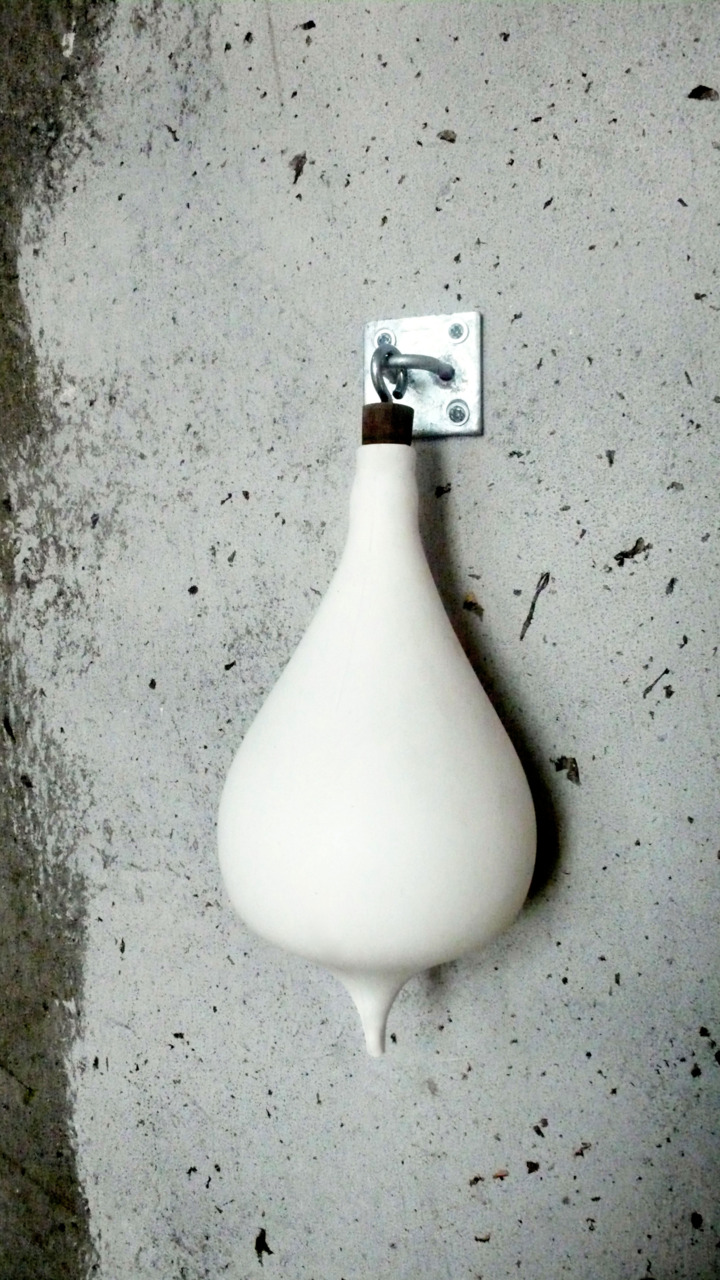
Designed by Olivia Decaris (2010), pouch is a malleable carafe that enables the consumer to fill up their glass by pulling and squeezing the container, with beverages including beer and wine. Inspired by the cow’s udder mechanism and symbolism, Pouch proposes an innovative way to serve, consume and share drinks.


Materials and process:
The product is made of food-grade liquid silicone rubber. The material is tasteless, sustainable and safe according to general health and safety rules. Pouch is Heat and cold resistant: it could be stored in the fridge for cooling.


According to its shape and thickness, the object requires being rotomoulded. The rotation moulding techniques enables to obtain a very thin layer of material that will expand when filled up with liquid. That process also allows an ongoing self production.

Video of the process on Vimeo: http://vimeo.com/15802994
Source

ciao!

Tuesday, 6 March 2012

Bio-inspired storage concepts

Concept 1 – Bookshelf inspired by human vertebral body


This concept is inspired from the vertebral body of human. I found human vertebral bones very interesting as they are very rigid, solid and structured but at the same time it also have liquid-like properties that possibly resulted from the S-shape of the whole structure. 


The core of the shelves that holds the structure together (the tall cylinder in the middle) shows a strong resemblance to the human spinal cord while the ‘leaves’ of the shelves resemble the vertebral bones. It is flat at the back as it is placed against the wall and from the side view we can see that the shelf have contours that is almost shaped like number ‘3’ or ‘S’ (rising at the top, then goes thinner in the middle and then goes bigger to the end). 

The shelf is designed to store books as it is placed against the wall but it is not necessarily limited to books, it may extend to other objects. But despite of the physical function of this shelf, the other aim of this concept is to evoke emotions to the users, to have the same feeling we have when we see human bone structures; the feeling of strength and power.


Concept 2 – Shelves inspired by termite’s nest


For this concept I got the inspiration from the complex structure of termite’s nest. The nest consists of many horizontal layers which are connected by spiral staircases. Termite’s nests are punctuated by a maze of tunnel-like galleries that effectively provide air conditioning as well as allow the termites to move through the nest. There are several entrance to their nest and they are well protected. 


Like the actual nest, this shelves consist of many horizontal layers that are stacked together, creating space to store objects from books, DVDs, or it can be used to store shoes and sandals as well. Mimicking the spiral staircases of termite’s nest, the structure of this shelves are well supported by stacks of layers (possibly using MDF sheet) that support each other balance.

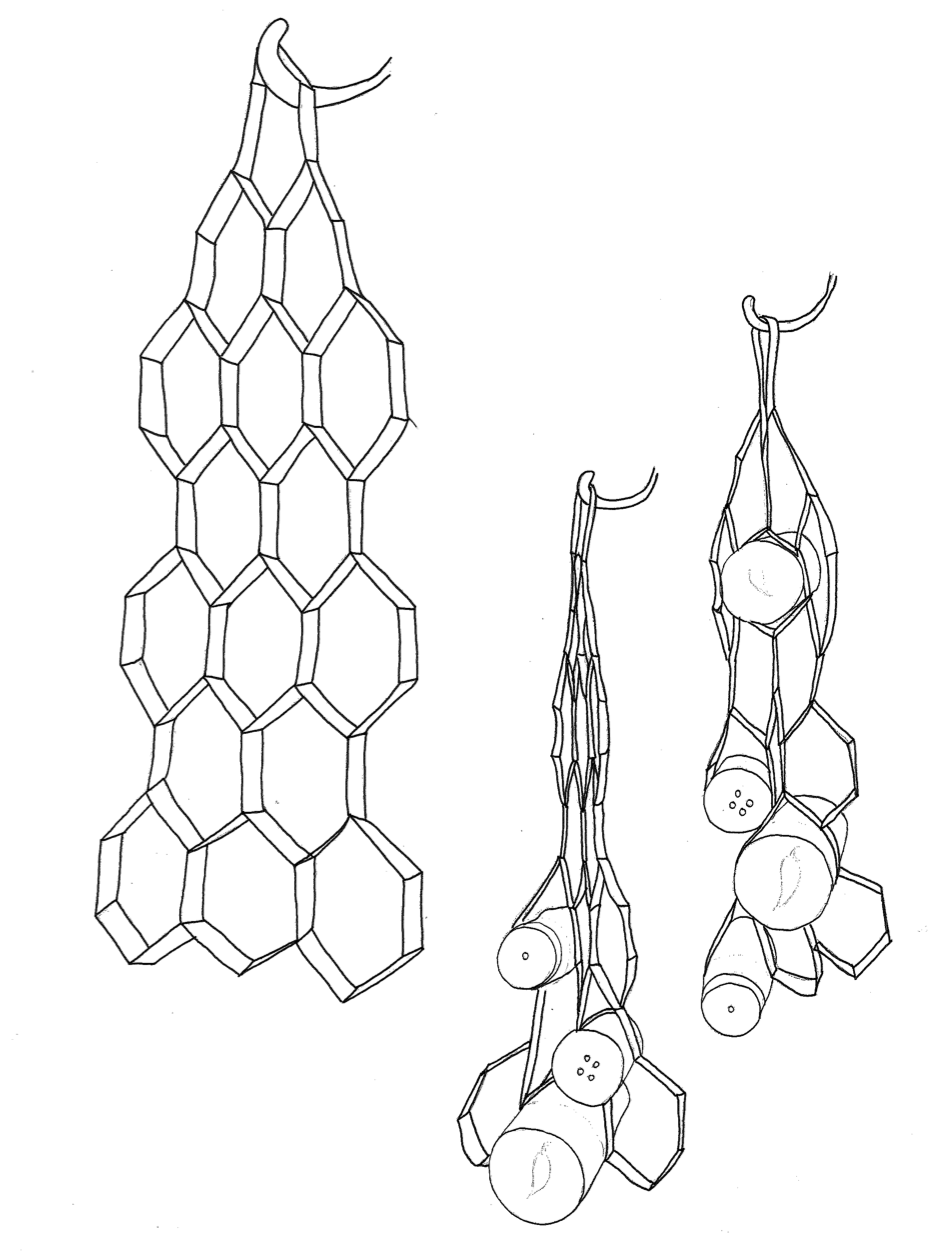
Concept 3 – Spice rack inspired by honeycomb


Honeycomb has been an inspiration in many design process, I believe because a hexagonal structure uses the least material to create a lattice of cells within a given volume. What I’m trying is to apply this geometric efficiency as a solution in designing storage for small spaces. 


This spice rack is made from fabric or some kind of material that is elastic (I’m still keeping my options open). It can be flat-packed when it’s not used and while we are using it, it only needs to be hooked. It also has the flexibility to store more or less as required.


Which one is your fave?
Feedbacks are welcome!

ciao!